Nova Scotia is home to many researchers and scientists who contribute to the rich and diverse research and innovation activities that are occurring in this province, across the country, and around the globe.
Many of these researchers are appointed to Nova Scotia universities, and Nova Scotia Health’s Affiliate Scientist program provides them with the additional opportunity to work with clinicians, decision makers, patients and family members to improve healthcare. These appointments are granted to researchers who are working with clinical and community health care teams at Nova Scotia Health, as part of the health authority’s academic mandate of working in partnership with local universities and colleges.
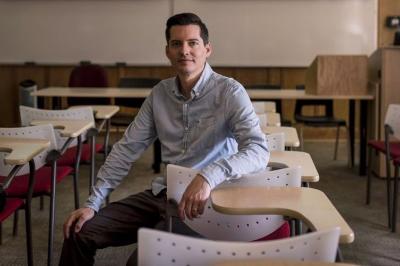
Currently, there are close to 100 scientists participating in this program, with research spanning a number of key areas in the health system - from supply chain management, nursing, diagnostic imaging, psychology, and Opthalmology to medical physics. One of these Affiliate Scientists is Dr. Jamie Livingston, an Associate Professor in the Department of Criminology at Saint Mary’s University.
Impacting life opportunities
Dr. Livingston grew up in a small town in Prince Edward Island, and became interested in law, criminal responsibility and mental illness during his undergraduate degree at UPEI. He then went on to pursue an MA and PhD in criminology at Simon Fraser University, where he learned more about the social response to people with mental illness -including their treatment in the legal and criminal justice systems.
“I began to specialize in studying issues at the intersection of the mental health, substance use, and criminal justice systems with an emphasis on learning from people with lived experiences about how society and institutional systems operate in ways that impact life opportunities, health outcomes, and criminal justice interactions,” says Livingston. “This is now the focus of my research program at Saint Mary’s University.”
“I explore the experiences of people who have been detained and incarcerated in jails, prisons, or forensic mental health hospitals,” continues Livingston. “This includes the challenges, including mental health and substance use stigma, which brings them into contact with the criminal justice system.”
His research has involved patients and service providers at Nova Scotia Health’s Mental Health and Addictions Program East Coast Forensic Hospital, who have welcomed and supported his research program since he landed in Halifax in 2013. In addition to his scholarly activities, he also volunteers with the 7th Step Society of Nova Scotia which is a mutual support group in Halifax for people with past and present criminal justice involvement – many of whom live with mental health and substance use issues
Livingston notes that a long legacy of mistreatment and neglect of people with mental health and substance use issues has resulted in their disproportionate representation in the criminal justice system in Canada. His research is helping to bring the perspective and experiences of people who’ve been socially marginalized, excluded, devalued, and discredited to the forefront.
“My research asks critical questions about society’s acceptance and normalization of coercive, involuntary, and criminal justice programs and interventions for people with mental health and substance use issues,” says Livingston.
The obvious (and rectifiable) injustices faced by people with mental health and substance use issues is what drives Livingston’s passion for this area of research. Directing his work at challenging the status quo and conventional thinking is what keeps his curiosity going.
“People who live with mental health and substance use issues inspire me. Advocates and activists fighting for human rights and social justice inspire me,” says Livingston. “A major inspiration early in my career was an anti-poverty and mental health advocate named Pat Caponni who lived in Toronto. She experienced mental health issues and social marginalization and wrote several books about it. I read one of her books, titled Upstairs in the Crazy House: Life of a Psychiatric Survivor, during my undergraduate degree.”
“I was taken aback by the appalling treatment of people with mental illnesses that she chronicled in her book,” adds Livingston. “A couple of decades after, I became Facebook friends with Pat and had the opportunity to present on a panel with her. I, of course, read everything else she wrote. Her compassionate and persistent activism was amazing.”
To learn more about Nova Scotia Health’s Affiliate Scientists, like Dr. Livingston, please visit the Nova Scotia Health website, and follow us on @NSHealthHub on Twitter for updates and additional profiles. To learn more about Mental Health and Addiction Services at Nova Scotia Health, visit the website.
