By: Heide Pearson
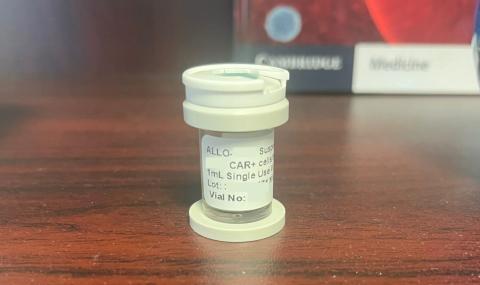
On a shelf in Dr. Mahmoud Elsawy’s office at the QEII Hospital in Halifax, sit six small vials in a cardboard box.
Each of those vials once contained 20 million donated chimeric antigen receptor (CAR) T-cells that have changed the course of Debbie Purchase’s life, all thanks to a groundbreaking clinical trial.
Debbie received an experimental new immunotherapy treatment in February 2024, after all other attempts to keep her cancer from recurring failed.
Debbie was first diagnosed with diffuse large B-cell lymphoma in 2017. Doctors turned to an aggressive chemotherapy called the Magrath protocol, which saw her spend three months in hospital both receiving treatments and enduring debilitating side-effects before being declared cancer-free.
Two years later, when the cancer came back, Debbie’s medical team tried a different chemotherapy protocol. She had fewer side-effects and her treatments could be done through the medical day unit, but it was still an arduous process.
Trying to get ahead of any more recurrences, Debbie's doctors explored doing a stem cell transplant, and with that, Dr. Elsawy became a member of her care team. But after undergoing so much chemotherapy, extracting stem cells for a transplant was proving impossible, putting Debbie’s future in jeopardy.
That’s when Dr. Elsawy suggested they try CAR T-cell therapy. After undergoing a battery of tests, Debbie was deemed a strong candidate not only for CAR T-cell therapy, but for an experimental treatment where she’d receive genetically engineered donor T-cells instead of her own.
The trial came just in time, too. A PET scan done a month before her treatment began revealed her cancer had come back yet again, this time an aggressive form that could have taken her life in a matter of months.
‘Way of the future for cancer’
Typically, CAR T-cell therapy involves extracting a patient’s own T-cells – cells each person has which normally attack bacteria and viruses – and inserting a gene to make the cells target certain cancers once injected back into the body. Each T-cell treatment is different; curated to work for each specific patient.
In recent years, though, researchers are seeing promising results with a new method of CAR T-cell therapy: synthesizing cells from healthy donors to both be accepted by an individual’s immune system and target specific cancers, eliminating the need to extract and process cells from patients themselves.
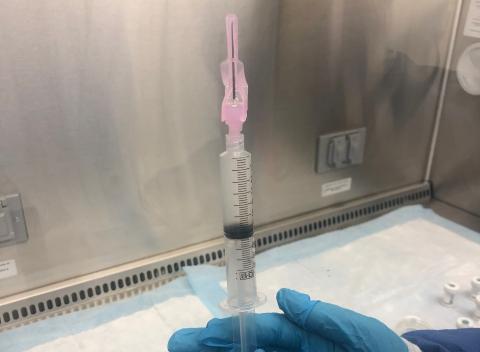
That’s the treatment Debbie received. In a single transfusion. In just 15 minutes.
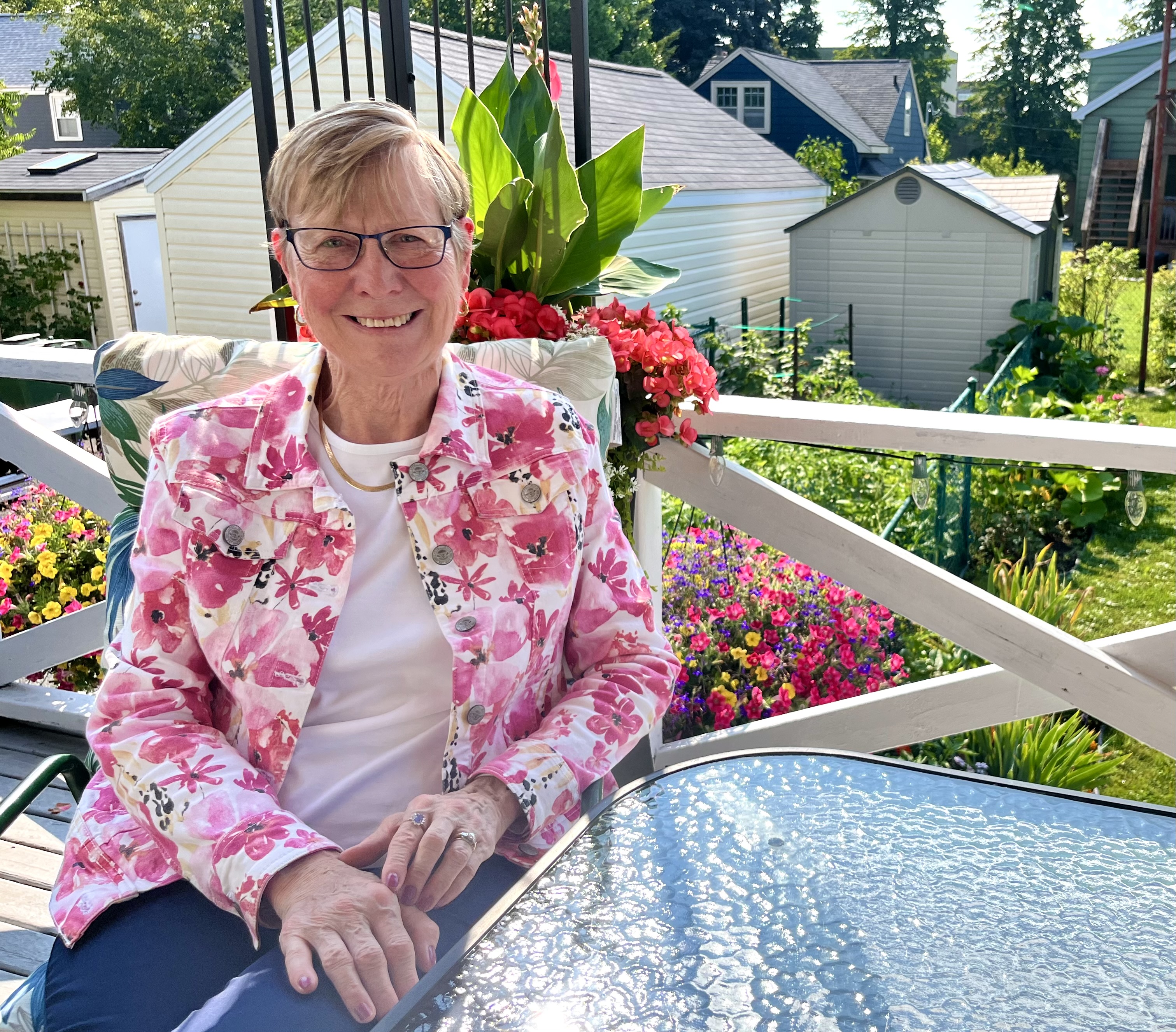
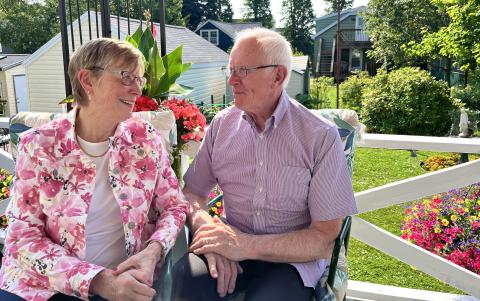
“I think it’s a way of the future for cancer,” Debbie said from the sunny back yard of her family home in Halifax’s north end.
She and her husband Michael stay there when they travel to the city from their home in Shelburne for her appointments.
‘Revolutionizing the way we treat cancer’
Dr. Elsawy, a hematologist and transplant and cell therapy specialist, has been working in Halifax since 2018. His main focus is CAR T-cell therapy: research, trials, and improving access to effective cancer care through that research and the trials he brings here.
Elsawy said CAR T-cell therapy is effective because it targets specific cancer cells, as opposed to chemo and radiation therapy. CAR T-cells also recruit more immune cells to keep fending cancer cells off, even long after their infusion. He hopes to see a future when patients might receive only a single infusion of T-cells – possibly donor cells – and be cured of their cancer.
“It's revolutionizing the way we treat lymphomas and acute leukemias and it did lead to potential cures among those deemed out of options,” Elsawy said of the first CAR T-cell trials.
“Now, where this is headed – because it worked very well in patients who were once out of treatment options and dramatically changed their lives – it’s moving to earlier lines of treatment and becoming a standard second line for select patients.”
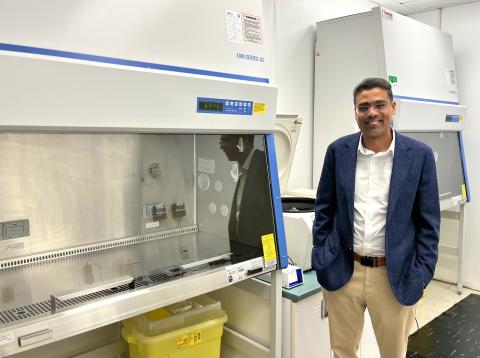
He believes this new approach of using donor T-cells will build on the game-changing impact CAR T-cell therapy is already having on the way doctors treat cancers.
Elsawy said being a part of a vast network of experts developing and offering these life-saving treatments is a “priceless” part of the job.
“It means a lot. I don’t work in a lab behind closed doors, I see patients every day and I feel for them,” he said.
“Each patient represents a partner, maybe kids, maybe siblings, maybe parents. It’s a life, it’s so many people’s lives that could be stake.
“So, when you have a patient in front of you and you know there is a potential treatment that can help this patient – and not just a patient, a family – that puts a lot of responsibility and also comes with a lot of gratefulness that you’re able to help.”
Since receiving her CAR T-cell transfusion, Debbie is cancer free and continues to have clear scans. Between check-ups, Debbie and Michael are taking back the bits and pieces of their lives they once wondered if they’d be able to experience together again. Travelling, visiting their five grandchildren, spending time with friends and family, volunteering and hitting the gym each day, all with a new sense of hope that perhaps this is the end of Debbie’s cancer journey.
“I said I want to dance at our grandchildren's wedding in high heels, so that's my aim,” Debbie said.
“And I am so happy and so thankful and so blessed that Dr. Elsawy’s given me a chance to do it.”
‘Potentially curative treatment’
Currently, T-cells are synthesized in labs in the United States. However, Dr. Elsawy and other researchers dually appointed at Nova Scotia Health and Dalhousie University are working to establish a lab to manufacture T-cells here in Nova Scotia, making the treatment more accessible and eliminating a significant portion of the cost associated with it. The creation of the lab has also received support from the QEII Foundation's BMO Ride for Cancer.
Elsawy said T-cell therapy is also being studied to treat other types of cancer, including solid tumors like melanoma. He sees the options expanding even further in the future.
“This is a potentially curative treatment,” he said. “It’s not another line of treatment that kind of extends patients’ lives by a few months. It’s a game-changer. With other treatments, you expect to extend life by several months, but many CAR T-cell recipients live for years and are potentially cured. They go back to their life.”
There’s a 70 per cent chance Debbie's cancer won’t come back after her CAR T-cell transfusion. She'll continue to be monitored closely by Dr. Elsawy for the next five years as part of the clinical study.
She said her story has been an inspiration to those around her who have found themselves on their own cancer journeys. She hopes that’s a legacy she can continue by being part of clinical research.
“There are a lot of our friends who have cancer, various types of cancer, and hearing what I went through earlier and what I’ve gone through now, I’ve seen them being lifted up by that. That feeling, that encouragement – knowing that there’s a chance,” Debbie said.
Research is care, and clinical studies help translate research into potentially life-changing therapies that can help you, your friends and your loved ones. Want to know more about how to get involved? Visit Nova Studies Connect today: novastudiesconnect.ca
