By Kirsten Millar
In the wake of the global COVID-19 pandemic, long-term care (LTC) facilities faced unprecedented challenges in keeping their residents safe from infections, both locally and nationally.
Nova Scotia has the highest population of seniors in Canada and our LTC facilities were significantly impacted by the COVID-19 pandemic. But the pandemic taught us that we can adapt and grow to face new challenges.
This is where Dr. Kenneth Rockwood, a Nova Scotia Health geriatrician, saw an opportunity to test a new method to prevent the spread of infections in LTC facilities.
“Many people in the nursing home population were very much at risk. Two-thirds or more of residents have dementia. They can’t reliably wash their hands, they can’t reliably maintain social distance, and they often won’t keep their mask on. When I heard of the opportunity to introduce a new technique that might allow us to do things differently, I said, ‘sign me up’,” says Dr. Rockwood.
“In 2020 we began to develop a clinical trial of whether whole room, direct exposure of far-UVC light helps to prevent the spread of COVID-19,” says Dr. Rockwood. “While vaccines effectively mitigated the spread of early SARS-CoV-2 variants, there is uncertainty surrounding future variants, and we remain concerned about all respiratory viral illnesses which cause significant harm and reduced quality of life for LTC residents.”
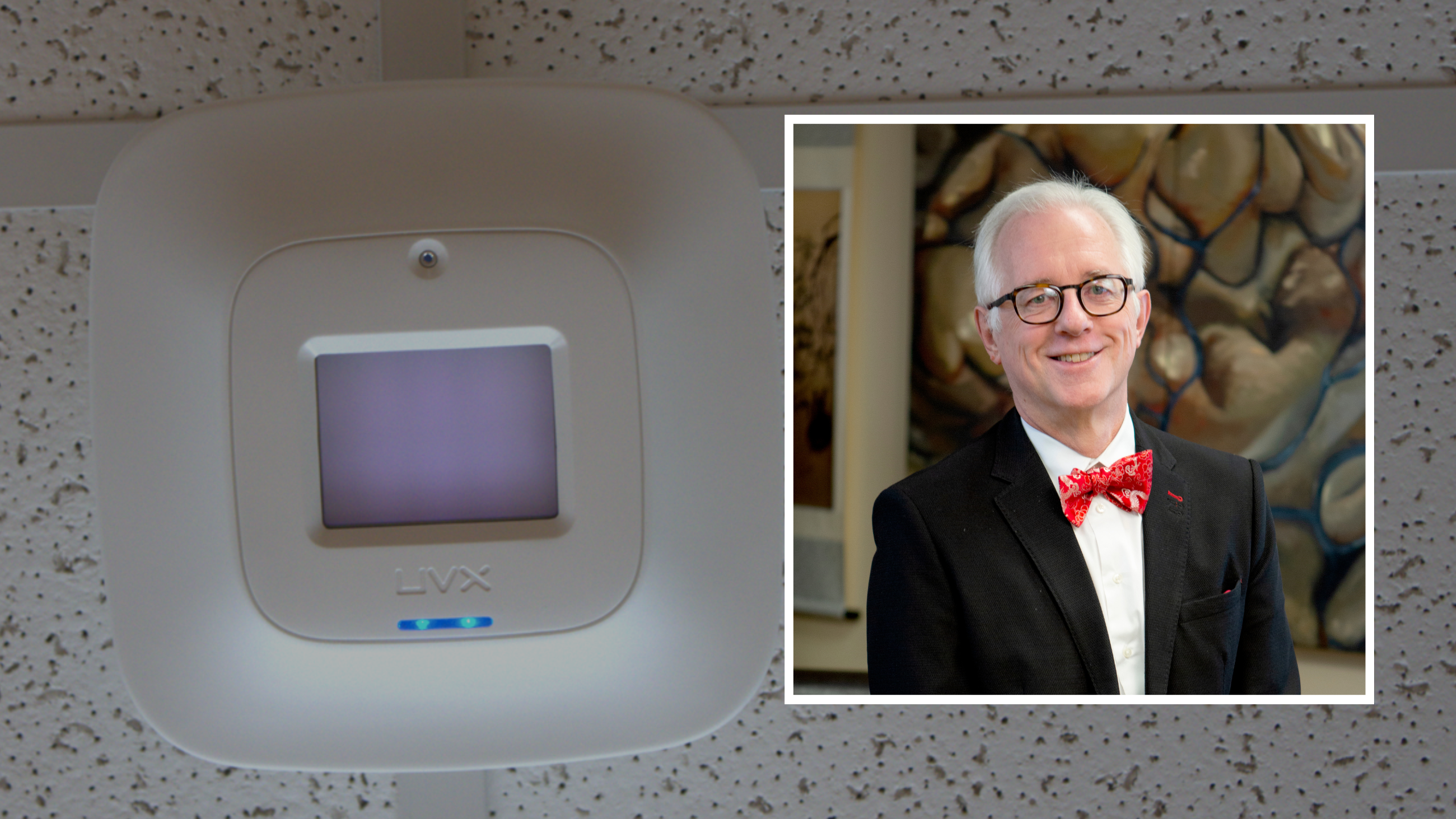
Dr. Rockwood’s team is working with far-UVC light technology from UVX, a Canadian-based company.
“The technology has shown to be more than 180,000-times safer than sunlight, with the ability to reduce microbial levels in a closed chamber to near zero within minutes,” says Kunal Sethi, UVX Co-Founder and CEO. “Given the technology’s immense potential, specifically in settings with vulnerable populations like seniors, we’re extremely excited to be working with Nova Scotia Health on this momentous project.”
“This ground-breaking research is helping us to fill the need for better infection prevention and control strategies in our long-term care facilities and will enhance experiences of care for our residents and their families and caregivers,” says Dr. Gail Tomblin Murphy, Vice President of Research, Innovation and Discovery and Chief Nurse Executive at Nova Scotia Health. “We are grateful for Dr. Rockwood’s significant contributions as a world-leading researcher, innovator and as a clinician to enhance care and access for older adults in Nova Scotia.”
Phase 1 of the trial is complete and the process for starting phase 2 is underway. Two LTC facilities participated in phase 1, and a third has been added in phase 2.
“In a meaningful way, the success of the first phase is that we got it done. We developed and worked out several new processes for rapidly screening the health of older people in long term care. We worked successfully with a group of patients, families and care providers that understandably, given the novelty, wanted reassurance about more studies being done on the heels of COVID. They have proved to be excellent partners. Throughout the process everyone we worked with has been understanding, engaged, and enthusiastic,” says Dr. Rockwood.
Dr. Rockwood’s team received funding from both the provincial government and from Research Nova Scotia for this project. Research Nova Scotia has also just announced that they will be investing $1.1 million towards phase 2 of research.
“As phase one was wrapping up, new technology was becoming available. Phase two was our chance to take advantage of state-of-the-art technology, to include an additional facility in Cape Breton, and to work with a Canadian technology company. We are leveraging new information to expand our research into the role far-UVC can play in preventing infections in long-term care,” says Stefan Leslie, CEO of Research Nova Scotia.
“If we can confirm far-UVC light to be safe and effective, it gives everyone a whole new approach to helping to reduce the incidence of airborne respiratory viral infections. And even though some of us might feel we are “done with COVID”, COVID doesn’t feel anything. And it might well not be done with us. The reason to plan is because without that, all we are doing is hoping. This plan will tell us what we actually can or cannot do,” says Dr. Rockwood.
This new method would not require residents and staff to do any additional work in order to see the result. “As long as they are willing to breathe, if far-UVC is effective in safely reducing the risk and spread of COVID and other airborne viruses, then everyone will be able to benefit from the work that we do,” says Dr. Rockwood.
For more information, see Research Nova Scotia investing an additional $1.1 million in infection control research in long-term care facilities.
